


Moving to the US with Kids: Family Relocation Guide


Moving with kids to a new country adds a layer of complexity that solo movers don't have to think about. Logistics that are already demanding become more complicated when you're also managing children's emotional well-being, school enrollment, healthcare continuity, and the simple reality that kids need stability at exactly the time when everything around them is changing.
This guide covers the practical and emotional sides of relocating with family to the US, from the initial planning through the documents you need, how to handle the move itself, and what settling in actually looks like.
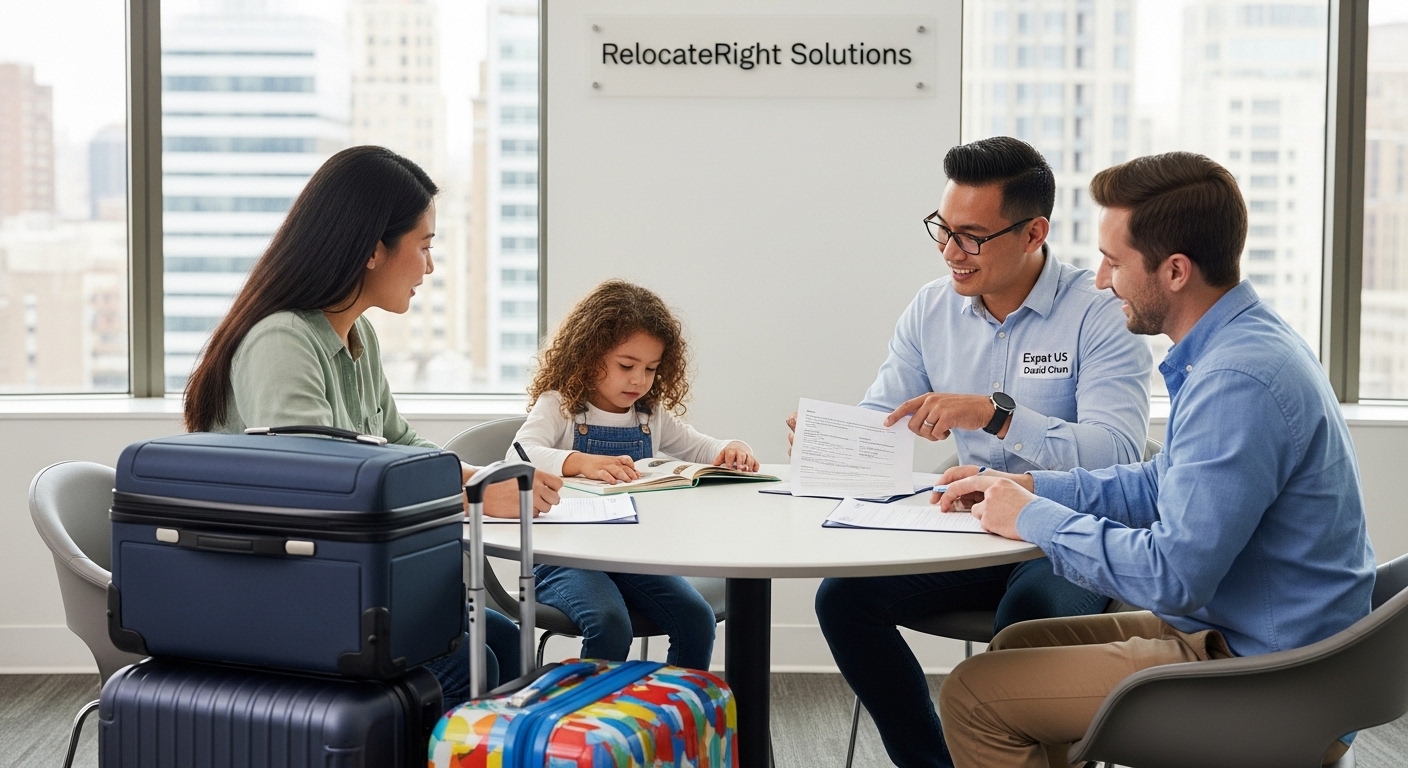
How to Start Planning Your Family Relocation to the US
Start planning at least 6 months. That timeline gives you enough time to handle visa applications, find housing, research schools, and sort out healthcare without everything happening at once in the final weeks.
- Housing. Finding a home near good schools and with safe access to children's activities should happen early. Temporary housing is a reasonable first step - it takes the pressure off finding the perfect place before you've arrived and had a chance to see the area in person. Many families relocating with their family to the US spend their first few weeks in furnished short-term housing while they work out the permanent situation.
- Schooling. Public school enrollment in the US is tied to your home address. Before you finalize where you're living, research the quality of schools in that district. Private school applications have their own timelines and waitlists - if that's the direction you're heading, start the process early. Some schools have specific programs for children coming from abroad, with language support and adapted onboarding.
- Healthcare. US health insurance isn't automatic. Before you arrive, you need a plan - through an employer, through the ACA marketplace, or through a private international insurer. Research pediatricians and family doctors who are accepting new patients in the area you're moving to. In the first weeks after arrival, this is often deprioritized, and then someone gets sick, and you realize you have no GP.
- Involving children. Moving with kids goes better when children are part of the process rather than just told what's happening. Show them photos of the new city, talk about what their school might look like, and look up nearby parks or activities together. It doesn't eliminate anxiety, but it replaces the unknown with something they can start building expectations around.
Moving Out of State with a Child: Legal and Document Checklist
International relocation with children has specific legal and documentation requirements that differ from those for adult-only moves. A complete moving out of state with child checklist should be verified well before departure.
- Passports. Every child needs a valid international passport for the journey and for US entry. Check expiration dates early - passport renewal for children can take longer than expected, and child passport applications typically require both parents to be present or to provide notarized consent.
- Visa documentation. Children's visa status depends on the type of visa the family holds. Verify that the child is correctly listed as a dependent on the relevant forms, and that the visa covers the full intended period of stay. Errors on dependent forms are a common cause of delays.
- School records. Your moving out of state with child checklist should include academic transcripts, report cards, vaccination records, and any documentation of special educational needs or programs the child was enrolled in. All of this will need to be available in English - certified translations may be required depending on the school district.
- Medical records. US schools require proof of immunizations before enrollment. Bring vaccination records from your home country and be prepared for the possibility that some vaccinations may need to be repeated or supplemented to match the US schedule.
- Custody documentation. If a child is traveling with only one parent, documentation of the other parent's consent is required - either a notarized letter of permission or a court order. This applies regardless of the reason for solo travel with a child.
How to Move with Kids Without Disrupting Their Routine
For children, routine is security. It tells them what to expect when everything else feels unpredictable. During a major move, the instinct is to let routines slide because there's just too much else going on. That's exactly when maintaining them matters most.
- Talk about it. How to move with kids without causing significant anxiety starts with honest, age-appropriate communication. Children handle transitions better when they understand what's happening and why, even if they don't like it. Explain the reason for the move, what will change, and what will stay the same. Let them ask questions. Don't minimize their concerns.
- Preserve friendships. A sharp break from friends is one of the hardest parts of moving with kids, particularly for older children and teenagers. Before leaving, help them exchange contact information and set up ways to stay connected online. Organize a goodbye event if the timeline allows. Acknowledging that these friendships matter - rather than brushing past them - makes the transition easier.
- Set up their space first. When you arrive at the new home, prioritize making the children's rooms feel familiar before dealing with other unpacking. Familiar bedding, favorite toys, and objects from the old home signal to children that this new place can become home. Getting their space set up on the first day or two pays dividends in the weeks that follow.
How to Move with a Toddler: Tips for the Youngest Travelers
How to move with a toddler requires specific planning because toddlers communicate stress differently than older children, can't be reasoned with in the same way, and have strict needs around sleep, food, and physical activity that don't pause for moving day.
- Prioritize comfort on travel days. Long flights with toddlers are manageable with preparation. Bring more than you think you'll need - snacks, changes of clothes, a few favorite toys, and something familiar to sleep with. New entertainment helps, but familiar objects provide the grounding that keeps a toddler calm when everything else is strange.
- Carry-on essentials. Keep diapers, wipes, snacks, water, a change of clothes for the child, and at least a shirt for yourself, medication if relevant, and a thermometer accessible in your carry-on at all times. These should not be in checked luggage. Whatever goes wrong on a long travel day, you need these items immediately.
- Maintain routine on the road. Toddlers regulate emotionally through predictability. Nap schedules, meal times, and bedtime rituals - maintaining these during transit days and immediately after arrival - significantly reduce the behavioral disruption that often follows a major move. It takes more effort when you're exhausted from the move, but the payoff is worth it.
- Expect regression. Toddlers often regress during major transitions - toilet training, sleep, separation anxiety. This is normal and temporary. Respond with patience rather than pressure.

Moving Your Family to Another State: Choosing the Right Location
Moving your family to another state or country means making location decisions that will shape daily life for years. For families with children, certain factors dominate the decision.
- School quality. This is often the deciding factor for families. Research school ratings for specific districts rather than cities overall - quality varies significantly within the same metropolitan area. Look at class sizes, language support programs, extracurricular options, and how the school handles newcomers.
- Safety. Crime statistics are publicly available by neighborhood in most US cities. Walk the area at different times of day if you're doing a pre-move site visit. Look at street lighting, proximity to parks, and the general infrastructure for children moving around the neighborhood independently as they get older.
- Cost of living. Moving your family to another state involves a financial calculation that needs to include housing, childcare, healthcare costs, and school expenses. These vary dramatically between states - a salary that works well in one city may be genuinely tight in another. Factor in state income tax rates, which differ significantly.
- Community. Areas with established expat communities or active family networks are easier to settle into. Online forums and local Facebook groups for expats in your target city give you a realistic picture of daily life.
Helping Your Family Settle After Relocating to the US
The first weeks after arrival determine a lot about how the transition goes. Moving family logistics are mostly behind you; the adaptation phase is what comes next. This period is where the quality of your pre-move planning shows - families that set up school enrollment, healthcare, and community connections in advance hit the ground running rather than starting from zero.
Every moving family settles at a different pace, and that's normal.
- Enroll children in school as soon as the required documentation is ready. The social connection that school provides is genuinely important for children's adjustment - home-based waiting is harder than being in a structured environment with peers.
- Register with a family doctor and pediatrician early. US primary care systems can have waiting lists for new patients, and you want established care before someone needs it urgently.
- Make the home feel settled. Unpacking completely, rather than living out of boxes for months, gives the whole moving family a sense of permanence that supports emotional adjustment. Children especially notice the difference between a house that's still in transit mode and one that feels like it's theirs.
- For children, after-school activities accelerate the settling-in process. A sport, a club, or a class gives them repeated contact with the same group of peers in a lower-stakes context than school. Friendships form faster when you see the same people regularly in a structured setting. For the adults, neighborhood associations, expat groups, and workplace connections serve the same function.
How to move with kids successfully is really about moving with kids intentionally - thinking about their experience alongside the logistics, not as an afterthought. The adults adapt faster. Children need more time and more deliberate support, and giving them that time tends to result in a smoother transition for the whole moving family. The families that find their feet quickest in a new country are generally the ones that treated the emotional preparation as seriously as the paperwork.
Expat-US helps families navigate the US relocation process from planning through settling in. Contact us to discuss your family's move.

