


H-4 EAD: Can Your Spouse Work in the US?

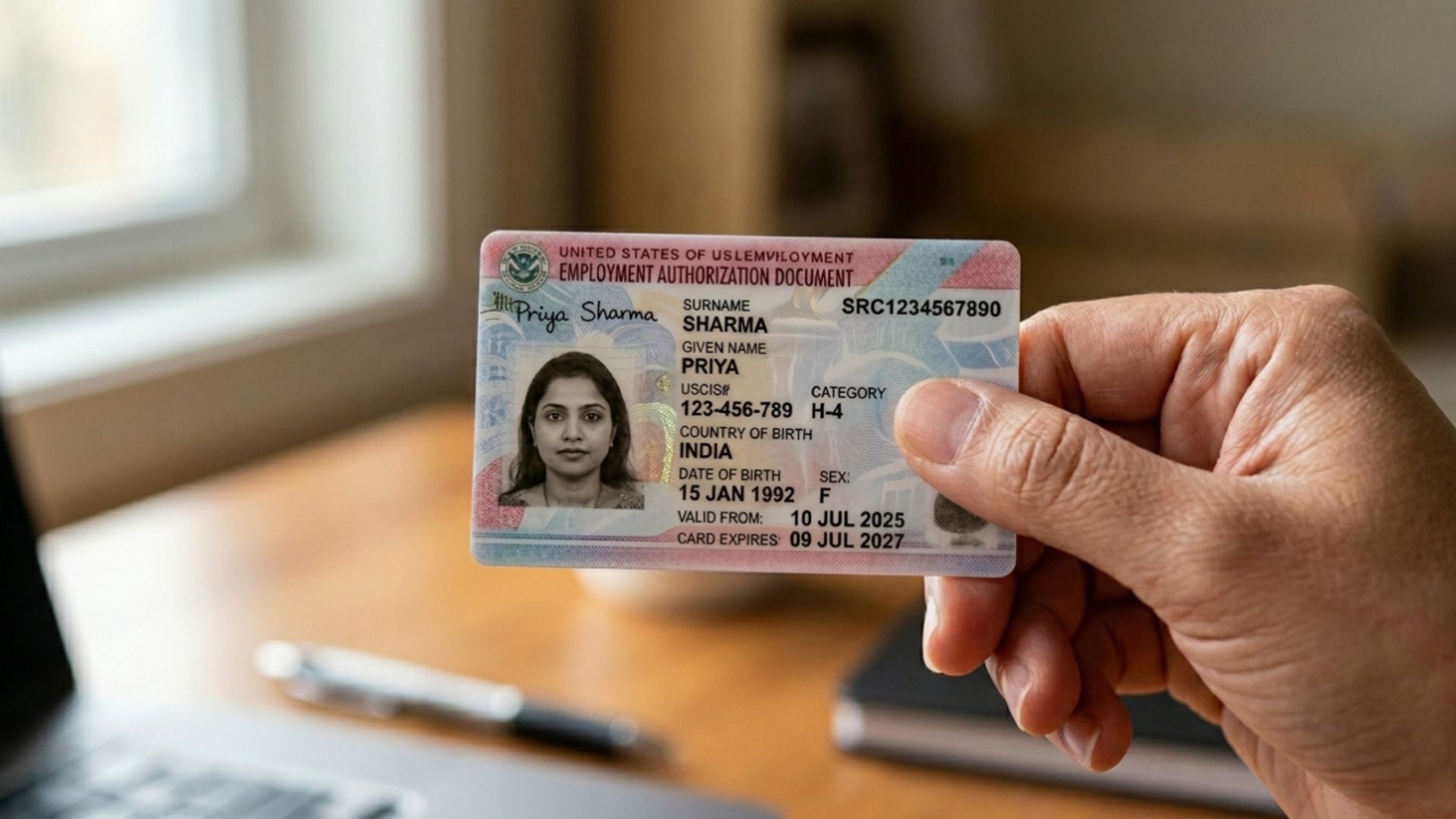
Short answer: yes, in many cases, but only after clearing a specific hurdle most people don’t hear about until it’s already affecting their household budget. A spouse on an H-4 visa can become authorized to work in the US, but that authorization isn’t automatic and isn’t available to everyone on an H-4.
Here’s a scenario we see often: a family relocates on an H-1B, the focus goes entirely toward the new job, finding an apartment, getting kids enrolled in school, and somewhere in that whirlwind, the question of whether the spouse can work quietly slips down the priority list. Then six months in, the reality of living on one income in a high-cost city like San Francisco or New York starts to bite, and the question becomes urgent.
The good news is that the rules genuinely do allow work authorization for eligible spouses - it’s just not as simple as “H-4 means you can work.” This guide walks through what H-4 status actually covers, who qualifies for an Employment Authorization Document (EAD), how the application process works, and the practical habits that keep this process from becoming a stressful gap in income.
What Is the H-4 Visa in the USA?
If you’re newly navigating US immigration paperwork, what an H-4 visa is in the USA is one of the first questions that comes up, and reasonably so, since the alphabet soup of visa categories rarely explains itself.
In plain terms, the H-4 dependent visa is the category for the immediate family of an H-1B worker: a legal spouse, and unmarried children under 21. It serves as a legal bridge: it lets your family live with you in the US while you work, but it has no independent legal standing.
That last point matters more than it sounds. An H-4 visa is entirely tied to the primary H-1B holder’s status. If the H-1B worker changes employers, files for an extension, or experiences any change in status, the dependent visas adjust accordingly. If the H-1B expires or is terminated, H-4 status becomes invalid at the same moment; there’s no separate clock running.
What H-4 status allows on its own: living in the US, signing a lease, opening a phone account, and enrolling in school. What it doesn’t allow on its own: earning income. That requires a separate, additional step, which is where the EAD comes in.
H-4 Status & How to Get It
How you obtain H-4 status depends almost entirely on where your spouse and children are physically located at the time of application.
If your family members are still abroad, they’ll go through consular processing: completing the DS-160 form online, paying the visa fee, and attending an interview at a US embassy or consulate. If they’re already in the US on a different non-immigrant visa, the alternative is filing Form I-539 to request a change of status without leaving the country.
Either route requires documentation proving the relationship: marriage certificates for spouses, birth certificates for children, with certified English translations if the originals are in another language. You’ll also need to show that the primary H-1B worker is maintaining valid status - recent pay stubs, tax records, and the H-1B approval notice all typically go into this packet.
One detail that simplifies long-term planning: once approved, your family’s H-4 dependent visa validity is matched exactly to the primary worker’s H-1B period. When the H-1B gets extended, the H-4 extensions follow the same timeline - everyone stays on the same legal calendar, which at least removes one set of dates to track separately.
Can an H-4 Visa Holder Work in the USA?
This is the question that brings most families to this page, so let’s be direct: can an H-4 visa holder work in the USA? Not automatically and not for everyone on H-4.
Holding H-4 status on its own does not authorize employment. Working without the proper authorization is a serious issue, not a technicality, so this isn’t a gray area worth testing. What it does mean is that eligibility for a work permit is tied directly to specific milestones in the primary worker’s green card process, not simply to having H-4 status itself.
Specifically, your H-1B spouse needs to have reached one of two points: either an approved Form I-140 (the Immigrant Petition for Alien Worker) or an extension of H-1B status beyond the standard six-year limit under AC21.
This rule exists largely because of how long green card backlogs have become for skilled workers from certain countries - waits stretching a decade or more are not unusual. The EAD gives families a way to maintain dual income through that wait rather than putting an entire career on hold.
Once approved, the permission is genuinely broad: full-time or part-time work for any employer, starting a business, or working as an independent contractor. It’s one of the more flexible work permits available - the restriction is really about when you become eligible, not what you can do once you are.
How to Apply for the H-4 EAD
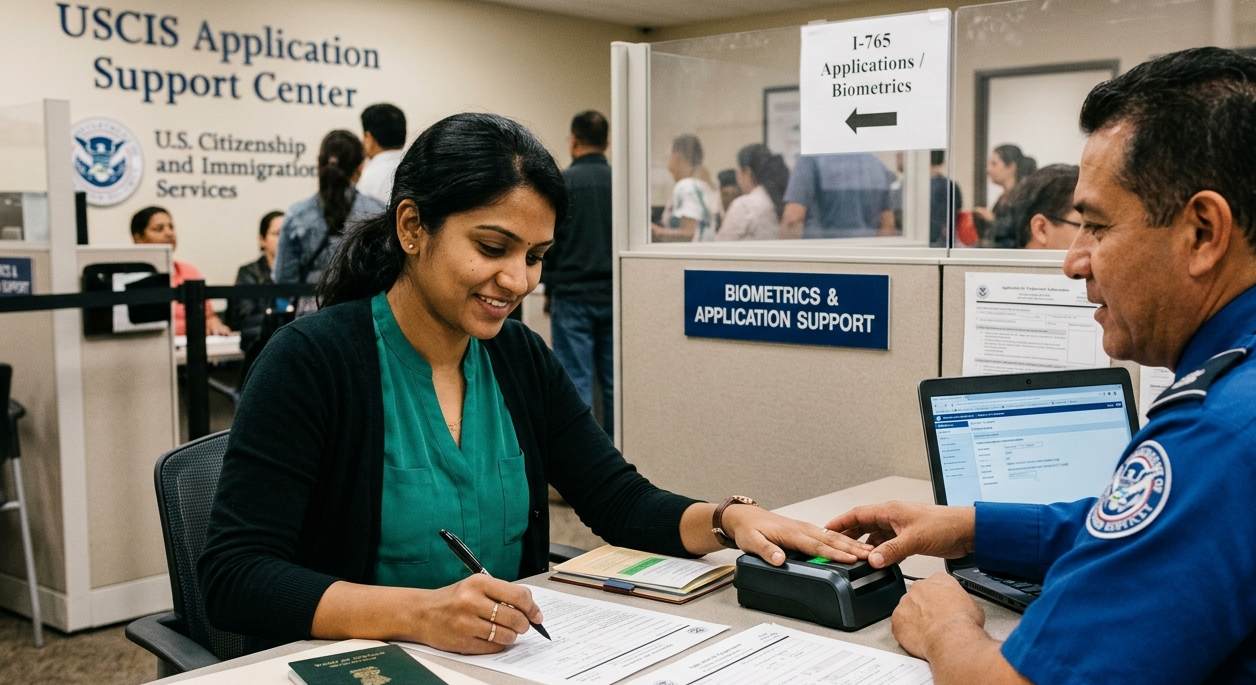
Once your spouse hits the eligibility milestone above, the application itself centers on Form I-765. You have flexibility in timing: it can be filed either alongside the initial H-4 and H-1B paperwork or separately later, once I-140 approval is in hand.
Along with the form, you’ll need passport photos, the filing fee, copies of the marriage certificate, copies of relevant passport pages, and the primary worker’s approval notices.
Here’s the detail worth flagging clearly, because it’s a recent change that catches people off guard: automatic EAD extensions for renewals filed after late 2025 have been eliminated. Renewal processing can take three to nine months, and if the current card expires before the renewal is approved, your spouse legally cannot work during that gap, even though the renewal is pending.
The practical fix is simple but unforgiving if missed: mail the renewal exactly 180 days before the current card’s expiration date. That window exists precisely to absorb processing delays without creating an income gap.
H-4 Visa Benefits
Employment authorization tends to dominate the conversation, but the full range of H-4 visa benefits extends well beyond the right to work.
Even before or instead of pursuing an EAD, H-4 dependents have full legal rights to attend school and university in the US and, depending on the state, may become eligible for in-state tuition after a year of residency. Travel in and out of the country remains straightforward as long as documentation stays valid - useful for families who want to maintain ties back home.
Once the work permit comes through, a Social Security Number follows, and this is genuinely a turning point for daily life. With an SSN, your spouse can open their own bank accounts, build a credit history, apply for credit cards, and handle the kind of administrative tasks (renting an apartment under their own name, financing a car) that otherwise route everything through one person’s paperwork. A valid H-4 status also typically allows for a local driver’s license and auto insurance - small things individually, but together they’re the difference between feeling like a visitor and feeling settled.
If your family is still working through the early stages of settling in - bank accounts, SSNs, local registration - these pieces tend to move faster once they’re sequenced correctly rather than tackled one at a time as they come up.
Common H-4 Mistakes & Tips
The single most common mistake is also the most preventable: treating the EAD renewal as something to deal with “closer to the date.” Given that a late filing means an immediate stop to work, not a grace period, this is one area where front-loading the paperwork pays off disproportionately.
A few habits that consistently keep families out of trouble:
- Synchronize every filing. Whenever the primary H-1B holder files for a job transfer, promotion, amendment, or renewal, prepare and submit the H-4 paperwork as part of the same package. Treating these as two separate timelines is how gaps happen.
- Check the I-94 after every trip. Each time your spouse re-enters the US, pull up the official I-94 record online and confirm the expiration date matches what’s expected. Border agent entries occasionally don’t match what was anticipated, and catching a discrepancy early is far easier than fixing it later.
- Keep one archive, not several. A single folder (physical or digital) with every approval notice, fee receipt, and pay stub related to the H-4 dependent visa makes any unexpected documentation request a non-event rather than a scramble.
None of this is complicated once it’s organized; it’s just unforgiving of being ignored. And honestly, that’s true of most of the relocation process: the individual steps are manageable, but they add up fast when a family is also dealing with a new city, new schools, and a new job all at once.
If your family is navigating an H-1B move and wants the visa side of things to actually sync up with housing, schools, and settling-in timelines, Expat US’s visa assistance is built around exactly that kind of coordination, so the H-4 and EAD timeline isn’t something you’re tracking alone on top of everything else.
Planning a move that includes your spouse’s career, too? Whether you’re relocating as a family or your employer is coordinating the move as part of a corporate relocation package, reach out to our team for a free consultation. We’ll help map out the timeline for visas, housing, and settling in together, so your spouse’s path to working in the US isn’t an afterthought, but part of the plan from day one.

