


How to Ship Personal Belongings to the US: Moving Guide


International shipping looks manageable until you’re actually in it. The logistics, documentation, customs requirements, and costs are all more complicated than the initial quotes suggest. Without proper planning, you end up paying more than expected, dealing with delays at customs, or finding that something didn’t survive the trip.
This guide walks through moving overseas shipping and shipping household goods overseas from the practical side - what decisions to make before you start, which shipping method fits your situation, how to pack correctly, and what customs expects when your belongings arrive in the US.
What to Do Before You Start Shipping Household Goods Overseas
Planning before you pack saves money and avoids problems that are expensive to fix mid-transit.
Create a complete inventory. Before anything gets boxed up, make a detailed list of everything you’re shipping. This does several things: it helps you estimate the volume and weight of your cargo (which directly affects cost), it serves as the foundation for your customs declaration, and it forces you to decide what actually needs to make the trip. Shipping household goods overseas costs money by weight and volume - a thorough inventory is the starting point for any realistic budget.
Declutter before packing. Most people ship things they don’t need, even at home. Furniture that doesn’t fit the new space, appliances that aren’t compatible with US voltage, and things that cost more to ship than to replace. Go through everything before a single box is packed. What can be sold? What can be given away? What genuinely needs to come with you?
The rule is simple: moving overseas shipping of items you’re going to replace or discard once you arrive is wasted money. Do the hard sorting before the movers show up.
How to Choose the Right Shipping Method for Your Move
Shipping household goods internationally involves three main methods. The right one depends on how much you’re moving, how fast you need it, and what you can spend:
- Sea Container. This is the standard method for full household moves - furniture, appliances, boxes of books, and kitchenware. It’s the most cost-effective option for volume. The trade-off is time: sea freight from Europe takes two to four weeks; from Asia, four to six weeks or more. You can book a full container (FCL) if you have enough to fill one, or share a container with other shippers (LCL/consolidated) if you don’t.
- Air Freight. Fast and expensive. Air freight is ideal for urgent items, documents, electronics, and other essentials that need to arrive quickly. The cost per kilogram is significantly higher than sea freight, making it impractical for furniture or large quantities of household goods. Use it for the critical items and ship the rest by sea.
- Consolidated Cargo (LCL). This sits between full container shipping and air freight. Your goods share a container with other shippers, and you pay only for the space you use. It’s a practical option for smaller moves - a studio apartment’s worth of belongings, for example. It costs more per cubic meter than a full container but less than air freight, and the timeline is similar to full container shipping.
Most relocating expats use a combination: air freight for what they need immediately, sea freight for everything else.
How to Ship a Container Overseas: Step-by-Step
Shipping a container is a structured process that consists of several stages. Each stage remains the most important for the safe and timely delivery of things:
- Booking. Contact a freight forwarder or international moving company to reserve container space. They’ll assess the volume of your shipment and recommend FCL (full container load) or LCL (less-than-container load). Get quotes from multiple providers - pricing varies significantly, and the cheapest quote isn’t always the safest choice. Verify that the company has experience with US customs requirements specifically.
- Loading. This is where damage prevention starts. How cargo is placed in a container determines whether it arrives intact. Heavy items go on the bottom. Fragile items go on top. Nothing should shift during transit. Working with a professional crew for this step is worth the cost - an improperly loaded container causes damage that no amount of bubble wrap can prevent.
- Documentation. You’ll need a bill of lading, a detailed inventory, and US customs forms before the container is released. Missing or incorrect documentation is the most common cause of port delays. Your freight forwarder should handle the paperwork, but you need to verify that the inventory matches exactly.
- Transit and customs. Once the container is at sea, the timeline is mostly fixed. The variable is customs clearance at the US port of entry. Clear documentation speeds this up. Errors, missing forms, or undeclared items slow it down - sometimes by weeks.
Understanding how to properly ship a container overseas is largely about preparation before it is loaded. Most problems people face when figuring out how to ship a container overseas come from skipping the documentation and planning stages. The actual shipping is the easy part.
How to Pack a Container for Overseas Shipping
How to pack a container for overseas shipping properly comes down to three categories: furniture, fragile items, and electronics. Each needs a different approach:
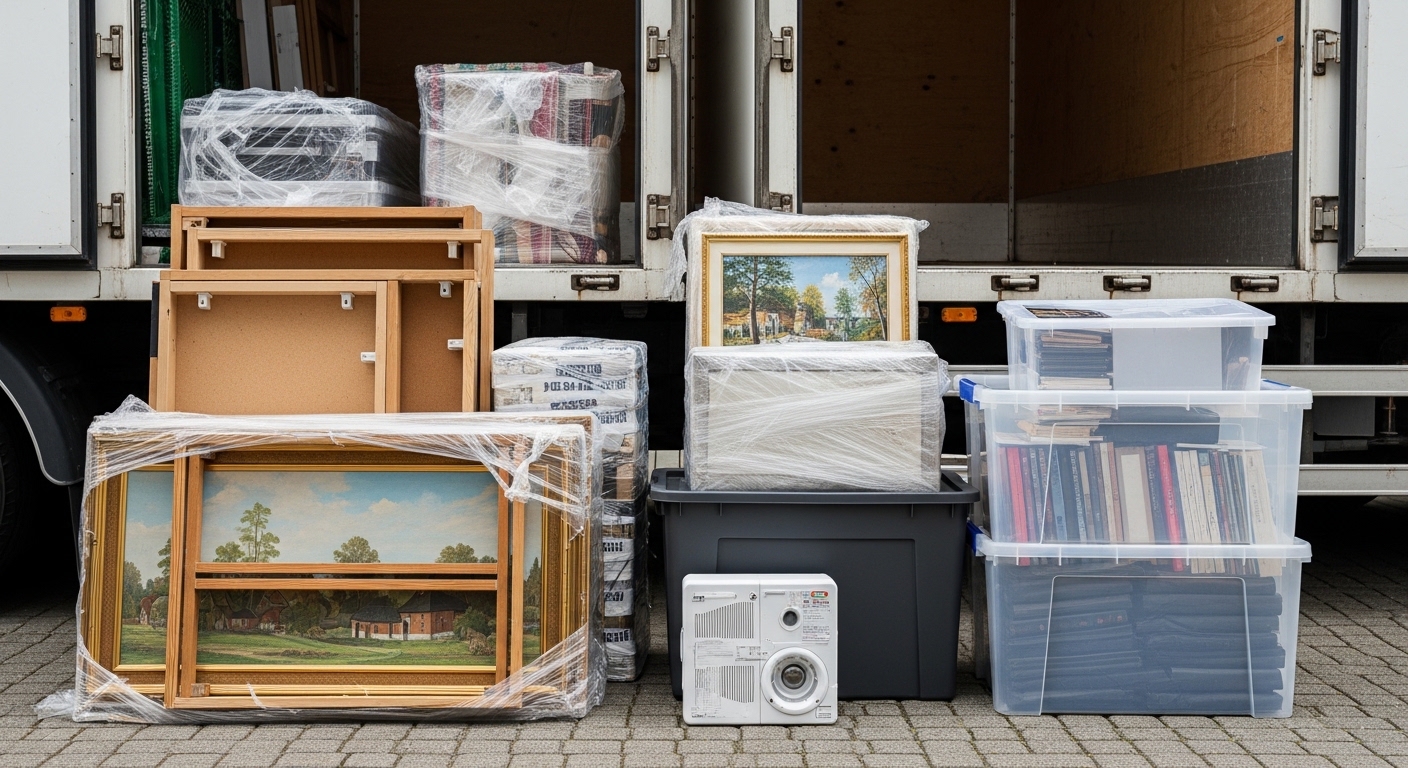
- Furniture. Disassemble anything that can be disassembled before it goes in the container. Tables, bed frames, shelving - breaking these down reduces volume and makes them easier to protect. Wrap all surfaces in moving blankets or furniture pads, and use stretch wrap over those to keep the padding in place. Legs, corners, and glass surfaces need individual protection. Secure everything so it can’t shift - furniture that moves during transit damages itself and everything around it.
- Fragile items. Glassware, ceramics, artwork, and mirrors need multiple layers of wrapping: tissue paper, then bubble wrap, then placed in boxes with adequate padding on all sides. Mark boxes clearly. Double-box anything particularly fragile or valuable. Place all fragile boxes on top of heavier cargo, never underneath it. How to pack a container for overseas shipment of fragile items incorrectly is the most common reason things arrive broken.
- Electronics. Original packaging is best if you still have it. If not, wrap each item individually in anti-static bubble wrap, then in standard bubble wrap. Electronics are sensitive to moisture and impact; moisture barrier bags help during humid transit conditions. Don’t pack electronics in the same boxes as heavy items. Keep them accessible in the loading order so they’re not buried under everything else.
Label every box on multiple sides and keep your inventory cross-referenced by box number. This speeds up customs inspections and helps locate anything quickly if needed.
Customs Rules When Shipping Household Goods Internationally
Shipping household goods internationally to the US is subject to US Customs and Border Protection requirements. Shipping household goods internationally without understanding these rules in advance leads to delays and unexpected costs. Compliance with customs requirements with US Customs and Border Protection requirements. Understanding these in advance prevents the delays and costs that hit people who don’t:
- Import declaration. Every item must be declared. CBP Form 3299 covers the declaration of unaccompanied personal effects. You’ll need a complete, detailed inventory - item descriptions, estimated values, and quantities. Vague descriptions like “household goods” aren’t sufficient.
- Duty-free eligibility. Most personal household goods that have been in use for at least a year qualify for duty-free import. New or unused items are treated differently and may be subject to duty. Keep receipts for any high-value items and be prepared to demonstrate prior use for items you’re claiming as personal effects.
- Restricted and prohibited items. Food products, certain plants and plant materials, firearms, and some categories of electronics are restricted or require additional permits. Hazardous materials cannot be shipped in a container. Check the CBP prohibited items list before packing - items discovered at customs are confiscated and may result in fines.
- Working with a customs broker. For most international household moves, using a licensed customs broker is worth the cost. They handle the forms, know the current requirements, and can resolve problems at the port that would otherwise take weeks to sort out independently.
How Do You Move Your Stuff to Another Country Affordably?
How do you move your stuff to another country without spending more than necessary? The main levers are timing, consolidation, and knowing what the real costs are before you commit:
- Timing. International freight rates fluctuate. Peak moving seasons - summer months and around major holidays - bring higher prices and less container availability. If you have flexibility in your move date, shifting it by even 4 to 6 weeks can produce meaningful savings. Book as far in advance as possible, regardless of when you’re moving.
- Consolidation. LCL shipping is specifically designed for people moving overseas, shipping without a full container’s worth of belongings. Sharing container space with other shippers is the most cost-effective option for smaller moves. The savings over booking a full container you don’t need are significant.
- Understanding the full cost. The most common financial surprise in international shipping is fees that weren’t in the initial quote. Customs brokerage, destination port fees, local delivery charges, and storage if you’re not at the destination when the container arrives. How do you move your stuff to another country without budget surprises? Anyone asking how do you move your stuff to another country for the first time is often surprised by how many costs aren’t in the headline quote. Get itemized quotes that specify what’s included and what isn’t.
- Insurance. Standard carrier liability covers a fraction of the actual value. Take out full-replacement-value insurance on your shipment. The premium is modest relative to what you’re shipping, and the cost of replacing even a few damaged items without insurance coverage quickly exceeds what proper insurance would have cost.
Common Mistakes to Avoid When Moving Overseas
Avoiding common mistakes helps to minimize delays and damage to goods. During an international move, many people make common mistakes. Often, these mistakes are even accompanied by additional costs and are very expensive:
- Packing errors. Insufficient protection and improper weight distribution are the primary causes of in-transit damage. Rushing the packing stage is the most common cause. Give packing the time it needs and use proper materials throughout.
- Inadequate insurance. Carrier liability is not insurance. It’s a minimal payment schedule based on weight, not value. A container of furniture and personal belongings has real replacement value - insure it for that value, not the minimum.
- Documentation errors. A mismatch between your inventory and your customs declaration can hold your container at the port while inspectors verify the discrepancy. Review every document before submission. Your freight forwarder should double-check everything, but so should you.
Shipping household goods overseas without proper preparation makes the process more stressful. Getting the details right in advance makes moving overseas shipping a manageable, predictable process - not a series of expensive surprises.
Expat-US helps people navigate every stage of relocation to the US. Contact us for guidance on your move.

