


US Healthcare for Newcomers: Doctors, Urgent Care & ER

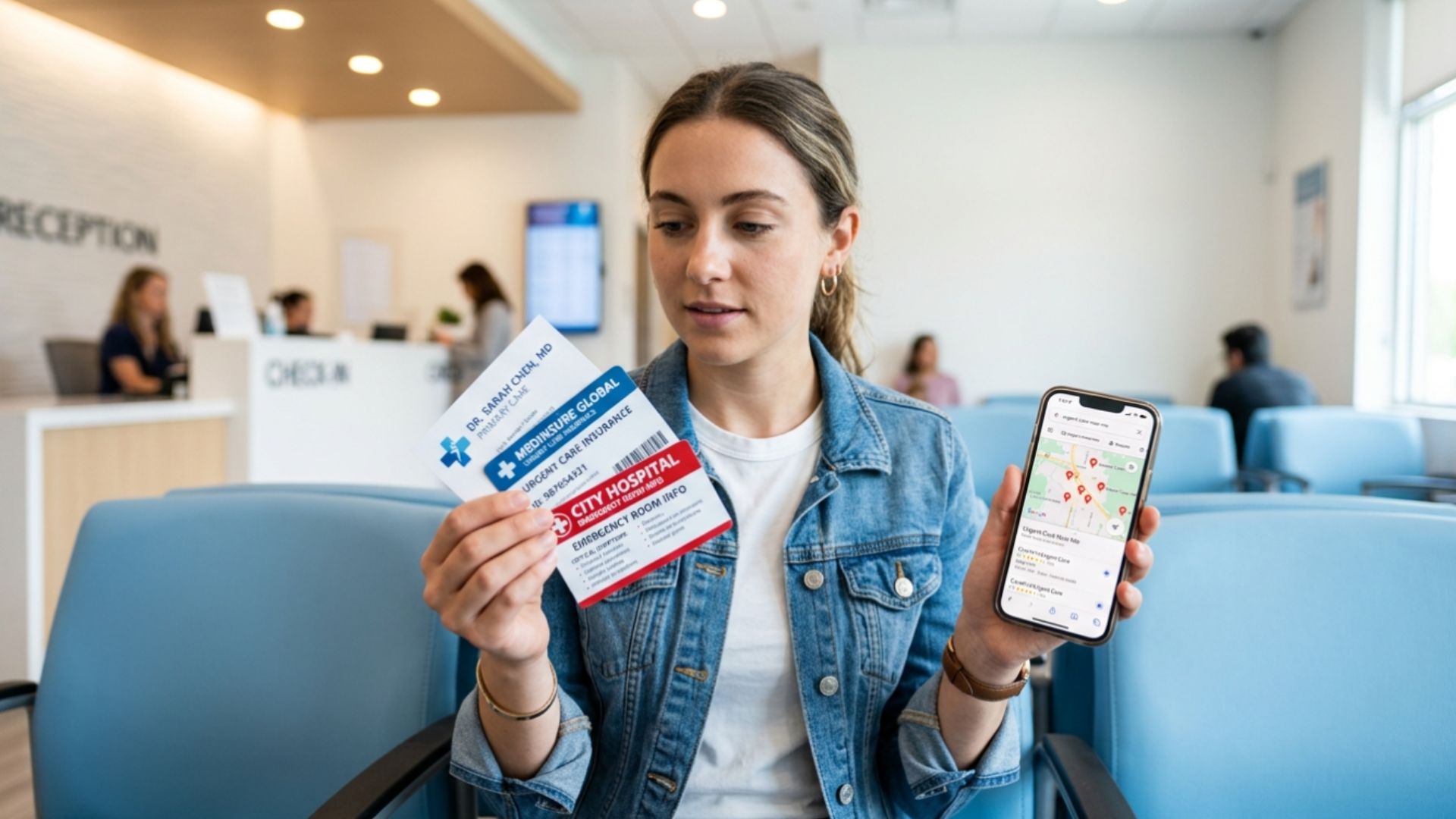
Imagine that you’re sick. It’s Tuesday evening, your primary care doctor can’t see you until Thursday, and you genuinely don’t know whether to wait it out, find a clinic, or head to the nearest hospital. If you’ve just arrived in the US, this situation will probably come up sooner than you’d like.
The American healthcare system runs on options, which sounds great until you’re the one choosing. Picking the wrong one doesn’t just cost you time; it can cost you hundreds of dollars unnecessarily. Understanding the meaning of urgent care before you actually need it is one of the smartest things a newcomer can do. And knowing what urgent care versus a regular clinic versus the ER? That knowledge alone can save your first month’s grocery budget.
What Is Urgent Care?
The simplest urgent care meaning: it’s a medical facility that handles conditions that need attention today, but aren’t life-threatening emergencies.
So what’s urgent care in practice? Think of it as the middle ground. You walk in without an appointment, see a licensed provider, and walk out with a diagnosis, prescription, or referral - usually within an hour or two.
How does urgent care work day-to-day: you show your insurance card (or pay out of pocket), fill out a short intake form, and get seen by a nurse practitioner or physician. Most centers are open in the evenings and on weekends, exactly when your regular doctor isn’t available.
Common reasons to go: fevers, ear infections, minor cuts needing stitches, sprains, UTIs, strep throat, or a bad cough that won’t quit. What urgent care is not built for: chest pain, difficulty breathing, head injuries, or anything where waiting even an hour feels dangerous. Those belong in the ER.
Urgent Care vs. Walk-In Clinic
Urgent care vs walk-in clinic comes down to medical complexity. A walk-in clinic (often found inside pharmacies like CVS or Walgreens) is designed for the simplest cases: vaccinations, routine checkups, minor infections, and blood pressure checks. They’re cheaper, faster, and widely available.
Urgent care centers are a step up. They have X-ray machines, basic lab tests, and the ability to handle fractures, lacerations, and moderate allergic reactions. The staff is typically better equipped clinically for unexpected situations.
If you just need a flu shot or a prescription renewal, a walk-in clinic at your local pharmacy is perfectly fine and often cheaper. If something genuinely went wrong today - a sprained ankle, a child with a high fever, a wound that might need stitches - urgent care is the right call.
Urgent Care vs. Emergency Room
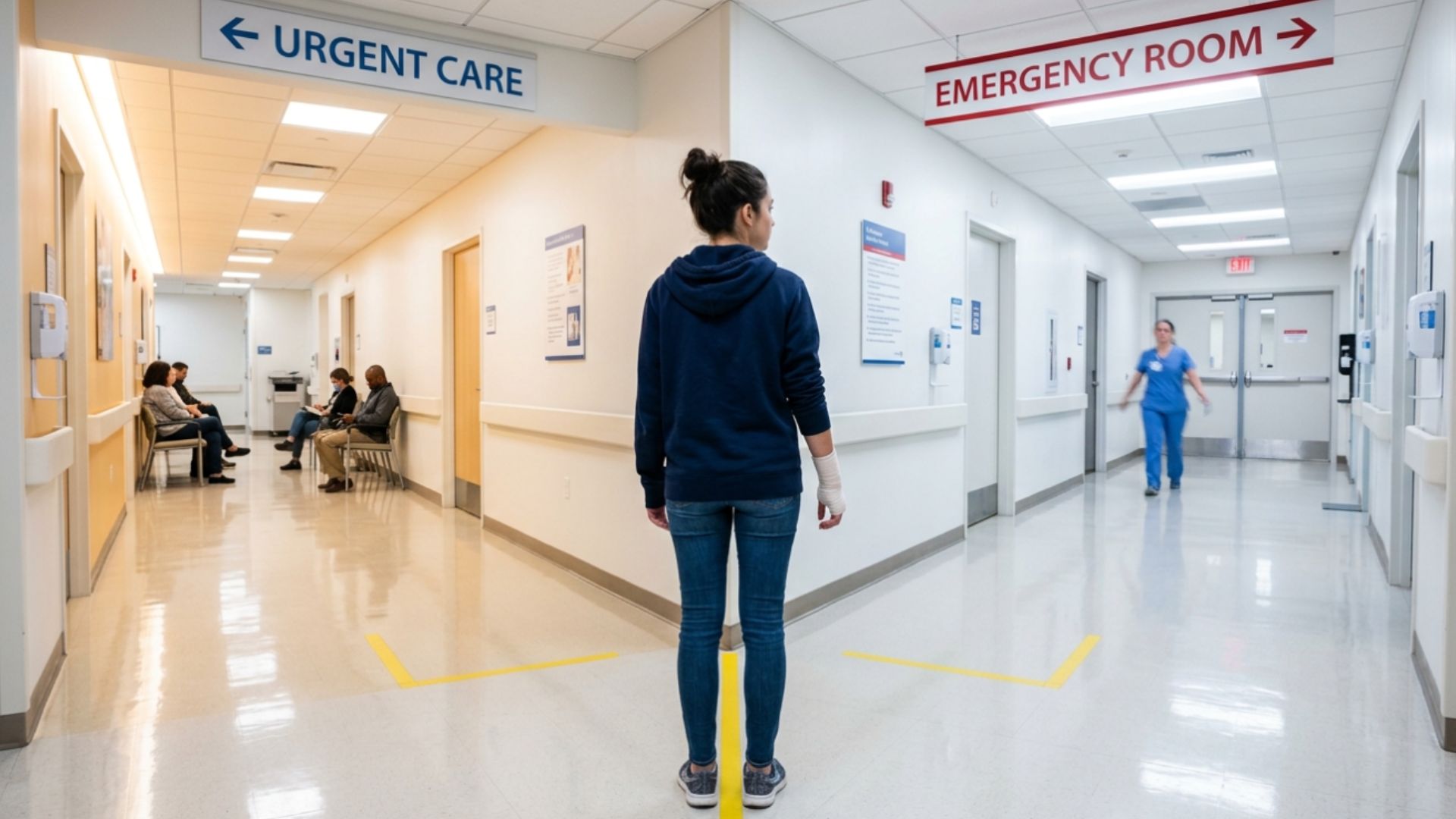
This is where the decisions get expensive. Urgent care vs emergency room: cost and severity are the two filters. An ER visit in the US without proper insurance can run $1,500-$3,000 for something minor. Urgent care for the same issue? Often $150-$300. The gap is real.
Is urgent care the same as ER? Not even close. Emergency rooms are staffed and equipped for life-threatening situations: heart attacks, strokes, severe trauma, difficulty breathing, and loss of consciousness. They’re open 24/7 for a reason, and they triage patients by severity, meaning a sprained wrist will wait behind someone having a cardiac event for hours.
Clear red flags that mean ER, not urgent care: chest pain or pressure, sudden severe headache, trouble breathing, signs of stroke (face drooping, arm weakness, speech problems), heavy uncontrolled bleeding, or any situation where you feel something is genuinely wrong in a serious way. Trust that instinct.
Tips for Newcomers Navigating US Care
The single best thing you can do when you arrive: find a primary care doctor before you need one. Most accept new patients, and having an established relationship means faster appointments, better continuity of care, and a real point of contact when something comes up.
On insurance: always carry your insurance card, know your copay amounts, and check that any facility you walk into is in-network with your plan. Out-of-network care can cost multiples of what you’d pay in-network, even for the same treatment.
At Expat US, health insurance is part of what we help expats set up from day one, because it’s one of those things that sounds manageable until it suddenly isn’t. Getting the right plan for your situation, not just any plan, makes an enormous difference the first time you actually need care.
Moving to the US and want to get set up properly from the start? Whether you’re an individual relocating or a company managing a team of assignees, book a free consultation with Expat US. We handle the paperwork, the setup, and the questions that nobody tells you to ask, so you can focus on actually building your life here.

