


Top Bank Accounts for Expats & International Residents


Moving to a new country is an exciting adventure. However, managing your money across borders can quickly become one of the most stressful aspects of the transition. Fees you didn't expect, transfers that take days, cards that don't work abroad - it adds up fast.
That's exactly why an expat bank account matters. These accounts are designed for individuals living, working, or relocating between countries. They give you the flexibility to hold multiple currencies, send money internationally without losing a chunk to fees, and manage your finances from wherever you happen to be.
In this guide, we'll walk you through how international bank accounts work, what to look for when choosing one, and the practical steps for getting set up.
International Bank Accounts vs. Local Accounts: Key Differences
When you first arrive in a new country, opening a local bank account feels like the obvious move. And for some things - paying utilities, receiving a local salary - it makes sense. But a local account alone won't cover everything an international resident needs.
Local accounts are designed for one country's economy. They often require a local tax ID or a permanent address, which can be hard to provide if you've just arrived. Many local debit cards charge a fee every time you use them abroad or purchase foreign currency. And transferring money internationally through a local bank? Often slow and expensive.
International bank accounts solve these problems. The three biggest advantages are:
- Cross-border access. You can log in and manage your money from anywhere. No flags, no sudden account freezes just because you checked your balance from a different country.
- Multi-currency features. You can hold, send, and receive money in multiple currencies under a single account. If you're paid in euros but spending in dollars, that matters a lot.
- Cheaper global transfers. Moving money between countries through an international account is usually significantly faster and cheaper than going through a traditional local bank.
For expats, remote workers, and people in the middle of a relocation, relying only on a local bank often means higher costs and less flexibility. A proper expat banking setup gives you a financial foundation that moves with you.
How to Choose the Best International Banks for Your Situation
There's no single "best" option for everyone. The right bank depends on where you live, how you earn, and what you need day to day. But when comparing the best international banks, these factors matter most:
- Monthly fees. Traditional global banks sometimes require a high minimum balance - $50,000 or more - to avoid monthly maintenance fees. Newer digital providers often offer free or low-cost options that work just as well for most expats.
- Foreign exchange rates. This is where banks quietly make a lot of money. Look for accounts that offer the mid-market rate or stay close to it. The difference between a fair rate and a poor one adds up significantly over time.
- ATM access. Check whether the bank offers free withdrawals at ATMs abroad or charges a fee every time you take out cash in a foreign country.
- Mobile app quality. For most expats, the app is the bank. You need to be able to freeze your card, exchange currencies, check balances, and transfer money instantly - all from your phone.
- Compliance and onboarding. All banks must follow Know Your Customer (KYC) rules, so document checks are unavoidable. The best international banks have made this process as smooth as possible - you upload documents through an app rather than mailing physical copies, and get verified within hours rather than weeks.
- Multilingual support. If something goes wrong at 2 am in a different time zone, being able to reach support in your language is genuinely valuable.
Top Bank Account Types for Expats
Expat banking isn't one-size-fits-all. Here are the main types of accounts worth knowing about:
- Multi-currency accounts. These are the gold standard for most modern expats. You can hold balances in dozens of currencies and switch between them at competitive rates. If you receive income in one currency and spend in another, this kind of account saves you money every month.
- Traditional global banks. Names like HSBC or Citibank offer premium international accounts that connect your banking history across countries. If you already have a long relationship with one of these banks, it may be easier to access credit or financial products in a new country.
- Digital-first providers. Services like Revolut or Wise have become popular with expats because they're easy to open, offer strong exchange rates, and work entirely through an app. They tend to be better for day-to-day spending than for complex financial needs like mortgages.
- Business or freelance accounts. If you're self-employed or running a business across borders, specialist accounts designed for freelancers let you invoice clients in their local currency and integrate with accounting tools. This makes you look more professional and saves your clients the cost of international transfers.
Most experienced expats use more than one account - a digital account for daily spending, and a more traditional bank for savings or formal financial needs.
How to Get an International Bank Account: Step-by-Step Process
How to get an international bank account has become much easier in recent years, especially with digital providers. But you still need to be prepared with the right documents.
What you'll typically need:
- Valid passport - the primary form of ID accepted by all international banks
- Proof of address - a utility bill or bank statement; some digital banks accept an address from your home country, others require a local one
- Tax identification number - from your country of tax residence
- Source of funds - for larger deposits, banks may ask for a payslip or employment contract to verify where the money comes from
Once you have everything together, the application process is usually straightforward. Most digital banks let you apply entirely online - fill out a form, complete a short video or selfie verification, upload your documents, and wait for approval. For digital providers, this often takes a few minutes to a few business days.
One thing to be careful about: make sure all your details match across documents. If your passport shows one spelling of your name and your utility bill shows another, the system may flag it and delay your application. Being clear about your residency status from the start also helps the bank categorize your account correctly and avoid issues down the line.
Common Fees, Taxes, and Compliance Issues in Expat Banking
No bank is truly free. Even accounts without monthly fees often charge an FX spread - the difference between the wholesale currency rate and what they actually give you. Other costs to watch for include SWIFT transfer fees for international wire transfers and inactivity fees if you don't use the account regularly.
Tax compliance is the part that catches people off guard most often. Banks are now legally required to share data with tax authorities in many countries, which is why they ask for your tax residency information when you open an account. It's your responsibility to report your global income to the appropriate authorities - expat banking doesn't change your tax obligations, it just gives you better tools to manage the money.
A few habits that keep things running smoothly:
- Tell your bank when you move. If your address or country of residence changes, update it promptly. An outdated address can cause your account to be flagged or frozen.
- Give advance notice for large transfers. If you're moving a significant sum - for a property purchase, for example - let the bank know beforehand. Unexpected large transfers can trigger fraud checks that delay the funds.
- Keep copies of key documents. Payslips, tax returns, and employment contracts are worth having on hand digitally. Banks occasionally ask for updated proof of income or source of wealth, especially for older accounts.
Practical Setup Checklist for International Residents
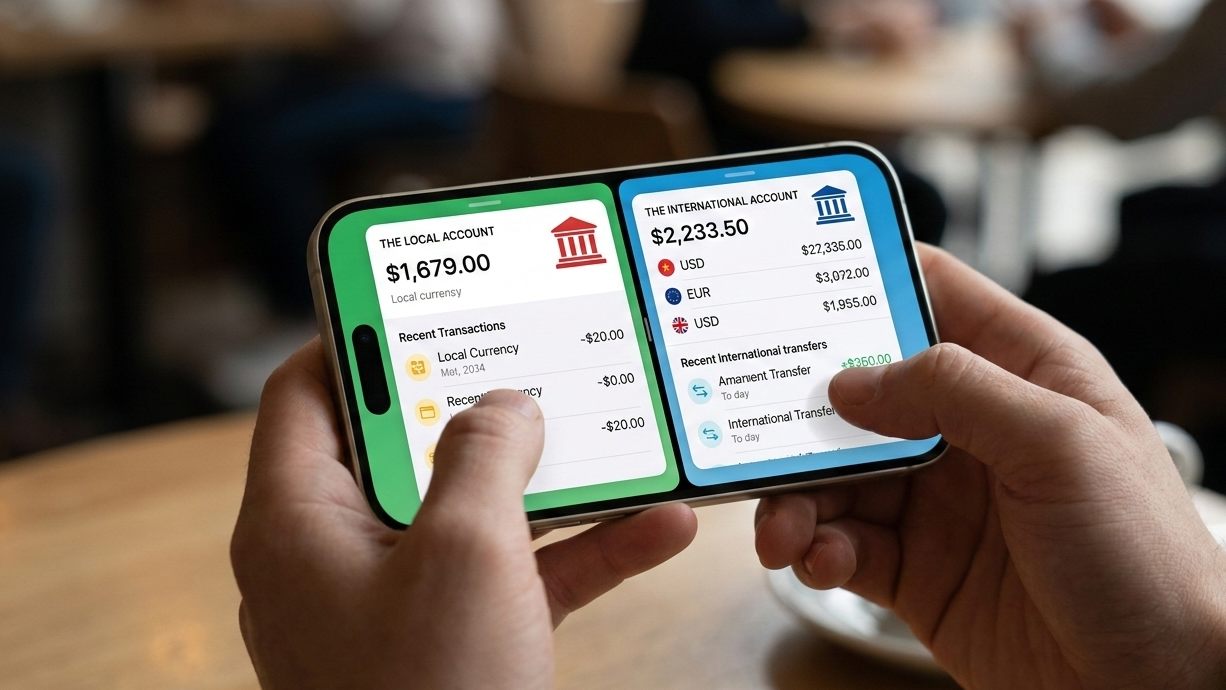
Most expats find that a two-account approach works best - one local account for day-to-day needs, and one international account for everything else.
- The local account covers domestic bills, local salary deposits, and anything that requires a physical presence in the country's banking system.
- The international account handles savings in multiple currencies, international transfers, and travel spending.
Quick setup checklist:
- Decide which account is most efficient for receiving your salary.
- Set up an automated monthly transfer from your international account to your local one.
- Always carry two cards from different banks - if one gets blocked, you won't be stranded.
- Enable transaction notifications on both accounts.
- Keep a small emergency cash reserve in a widely accepted currency.
Getting your banking sorted early makes everything else about settling in easier. It's one of those things that feels administrative until you're trying to pay a deposit on an apartment and your card doesn't work.
At Expat US, we help expats and their families navigate every practical aspect of relocating to the United States - including settling-in support, banking guidance, and help with everything from your Social Security Number to finding a home. Book a discovery call to see how we can make your move smoother.

