


How to Get a US Driver's License as an Expat

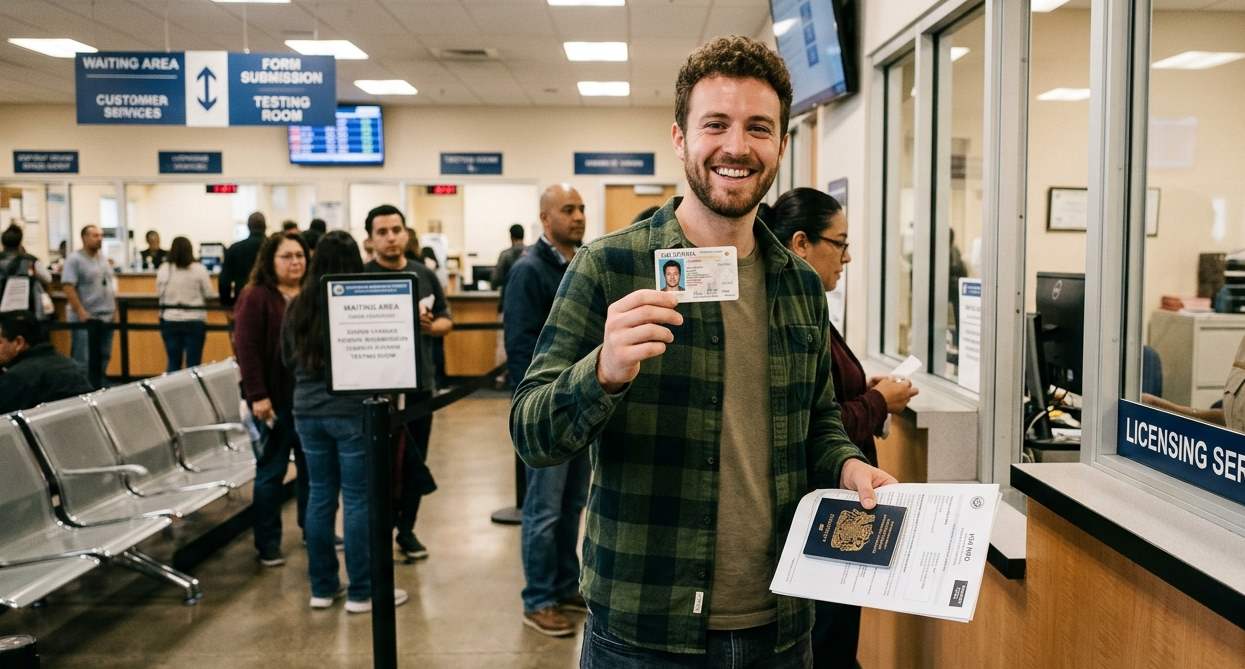
The United States relies heavily on cars. In most cities and suburbs, getting groceries, commuting to work, and doing almost anything practical requires driving. One of the first things new arrivals figure out is that a US driver’s license isn’t just a formality - it’s a functional necessity.
So, now we’ll look at what you can do with a foreign driver’s license when you arrive, how the international driving permit fits in, and the actual process for getting a US driver’s license that’s yours permanently.
Can You Drive in the US with a Foreign License?
Can you drive in the US with a foreign license? Yes, with some conditions. The US generally allows new arrivals and short-term visitors to use a valid home-country license. How long you can use it depends on the state.
In most states, you can drive on a foreign license for anywhere from 30 days to a full year. If you’re visiting as a tourist, your home license is typically enough for the duration of your stay. Once you establish residency, most states require you to apply for a local license within 30 to 90 days.
If your license isn’t in English, you may run into issues with state DMVs and rental car agencies. Some states (like Georgia and Massachusetts) have stricter documentation requirements. In these cases, carrying additional proof of your driving history can save you time and frustration.
International Driving Permit: Do Expats Really Need One?
The international driving permit is commonly misunderstood. It’s not a separate license - it’s an official translation of your existing home-country permit. It presents your photo and credentials in multiple languages, allowing police, rental agents, and officials to quickly understand your driving history without needing to read a license in a foreign script.
You need to get your international driving permit before you leave your home country. The US doesn’t issue them to foreign visitors - only to people who already hold a valid American license.
For the first few months after arriving, the IDP works as a practical bridge. It lets you rent a car, buy a vehicle, and drive legally while you wait for your DMV appointment. Even if your state doesn’t strictly require one, having it on you is smart. Getting pulled over with a home-country license that an officer can’t read is the kind of situation that creates unnecessary problems. The IDP prevents that.
How to Apply for a US Driver’s License as a Non-Citizen
The US doesn’t have a single national driver’s license. Each state runs its own process through its Department of Motor Vehicles. The general steps are consistent, but specific requirements vary by state.
Documents you’ll typically need:
- Valid passport and current visa (F-1, J-1, H-1B, etc.)
- I-94 arrival/departure record
- Social Security Number, or a letter from the SSA confirming you’re ineligible
- Two proofs of residency - utility bill, lease agreement, or bank statement showing your US address
After your documents are verified, you take a vision test and a written knowledge exam covering local road signs and traffic laws. Once you pass the written test, you schedule a road test. Completing all of this gets you your American driver’s license.
DMV offices can be genuinely busy, especially in large metro areas. Book your appointment online in advance if the option is available - walk-in wait times can run hours.
Tips for Expats Navigating the US Driver’s License Process
Check for reciprocity. Some states have agreements with specific countries that let you skip the written or road test entirely. You hand over your foreign license, pay a fee, and get a local permit. Not every country or state has this arrangement, but it’s worth checking your state’s DMV site before assuming you need to sit through a full exam.
Study the local handbook. Even if you’ve been driving for 20 years, the US has specific rules that will be new to you. Right turns on red are legal almost everywhere in the country, unless there’s a sign saying otherwise - which surprises many European drivers. Speed limits and distances are in miles, not kilometers, so getting your mental math adjusted matters.
Pass the road test on the first try. US driving examiners are strict about defensive driving habits. Use your turn signals for everything. Come to a complete stop at stop signs - rolling stops are not allowed. Exaggerate your head movements when checking blind spots, because examiners are specifically looking for that. These aren’t unusual demands - they’re the standard expectation.
Getting your United States driver’s license properly is a significant step in feeling settled. Most states also require it within a few months of establishing residency, so it can’t wait indefinitely.
- Arrive with your foreign license and an international driving permit from your home country
- Drive legally during the transition period (typically 30-90 days, depending on your state)
- Gather your documents: passport, visa, I-94, SSN or SSA letter, and two proofs of residency
- Pass the vision test and the written knowledge exam
- Pass the road test
- Receive your American driver’s license and United States driver’s license
The process takes time and involves some waiting, but it’s manageable. Most expats who come prepared with their documents and have done a bit of reading on local traffic laws clear it on the first attempt. The whole process from arrival to obtaining a valid local license typically takes four to eight weeks if you’re organized from the start.
Expat-US helps people navigate the practical side of relocating to the US, including the bureaucratic steps in the first few months. Contact us if you need guidance on settling in.

